Rafael Walter · 15 November 2026
Visual Task Boards Help Organize Experiments in Poland's Vocational Training Labs
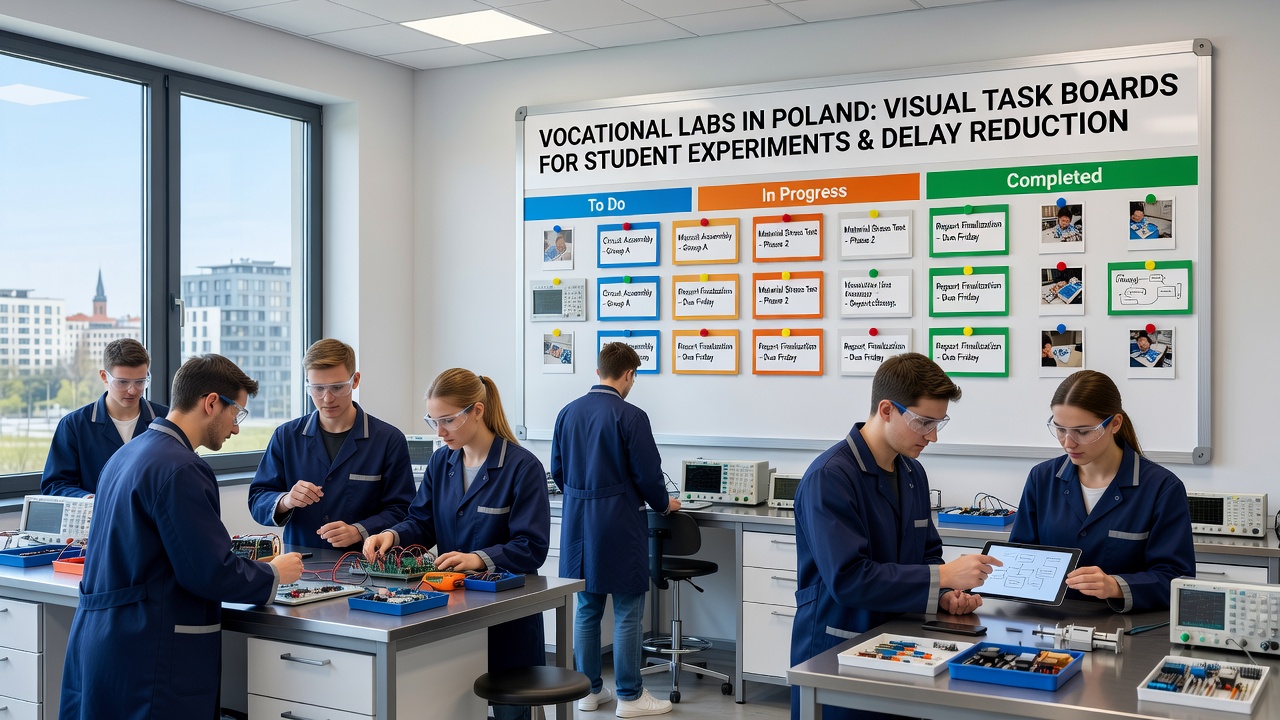
Vocational labs across Poland have started integrating visual task boards into daily operations, and this shift focuses on mapping out student experiments with clear columns for planning, execution, review, and completion stages. Institutions in regions like Silesia and Greater Poland report that these boards display tasks on physical or digital surfaces so teams can see progress without constant verbal updates, and the approach draws from established project management methods adapted for educational settings.
Implementation Patterns in Technical Programs
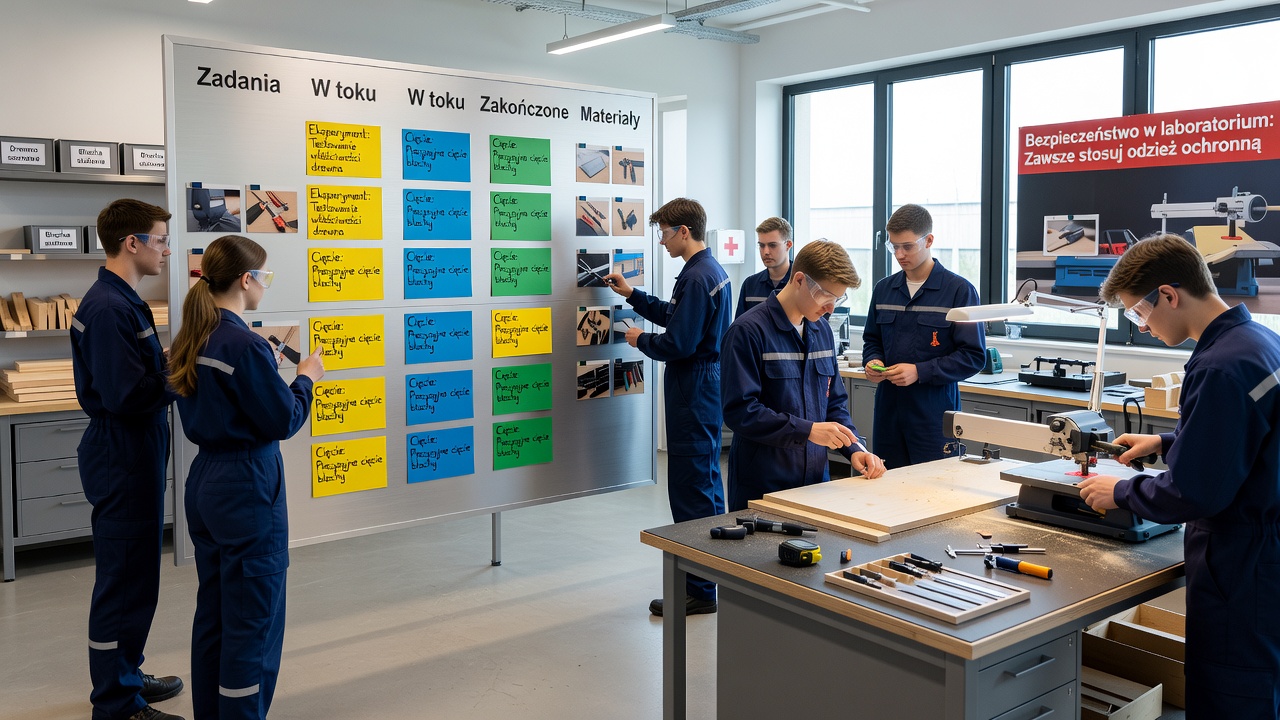
Secondary vocational schools offering programs in mechanics, electronics, and biotechnology began rolling out these boards during the 2024-2025 academic year, with instructors assigning roles such as task owner and reviewer to student groups. Data from the Polish Ministry of Education and Science indicates that over 180 facilities incorporated the tools by mid-2025, and the boards typically use color-coded sticky notes or software interfaces to mark experiment phases like safety checks, material preparation, data recording, and final analysis. Observers note that this setup reduces time spent searching for missing steps or duplicated efforts because everyone involved can scan the board at a glance.
Training sessions for educators ran through regional centers, where facilitators demonstrated how to break down complex lab procedures into smaller, trackable items. One program in Kraków, for instance, applied the boards to chemistry experiments involving titration and spectroscopy, allowing teams to move cards forward only after peer verification. Figures from the European Centre for the Development of Vocational Training show similar patterns emerging in other EU member states, yet Poland's rollout emphasizes integration with existing curriculum requirements rather than wholesale replacement of traditional methods.
Effects on Experiment Timelines and Resource Use
Schools that adopted visual boards recorded measurable drops in experiment overruns, with some programs cutting average completion times by 15 to 25 percent according to internal tracking logs shared at education conferences. Delays often stemmed from students overlooking sequential dependencies or waiting for shared equipment, but the boards made those bottlenecks visible early, prompting quicker reallocation of resources. In November 2026, the Ministry plans to release aggregated national statistics from the ongoing pilots, including comparisons between board users and control groups that continued with paper logs alone.
Resource management improved as well, since boards included dedicated sections for inventory status and booking slots for tools like oscilloscopes or 3D printers. Instructors observed fewer instances of last-minute scrambles for supplies, and student teams developed habits of updating statuses in real time during lab sessions. Research from the OECD's education directorate highlights comparable efficiency gains in vocational settings in countries like Germany and Australia, where visual systems support hands-on learning without adding administrative layers.
Support Structures and Regional Variations
Coaching networks established by provincial education offices provide ongoing guidance, and these efforts include monthly review meetings where teachers share board templates tailored to specific trades. Northern coastal schools, for example, adapted the format for marine engineering labs that involve safety protocol sequencing, while inland agricultural programs applied it to soil testing workflows. The variations show how the core concept scales across disciplines, with boards remaining simple enough for quick setup yet flexible for subject-specific details.
Digital versions of the boards gained traction in facilities with reliable internet, allowing remote access for students reviewing work outside scheduled hours. Hybrid approaches combine wall-mounted boards for in-lab use with synchronized apps for documentation, and this combination addresses both tactile preferences and record-keeping needs. Data collected through these platforms feeds into school reports that track skill development metrics tied to national qualification standards.
Broader Context Within Polish Education
Poland's vocational sector continues to align with European frameworks that prioritize practical competencies, and visual task boards fit into that direction by making workflow explicit. Partnerships with industry partners supply real-world experiment scenarios, which the boards then help structure for classroom delivery. As more programs document outcomes through these tools, patterns emerge around improved group coordination and reduced idle time during practical classes.
Conclusion
Vocational labs in Poland continue to refine their use of visual task boards as part of routine lab management, with ongoing data collection set to clarify long-term effects on student throughput and equipment utilization. The method's spread reflects a practical response to common coordination challenges in technical education, and updates scheduled for late 2026 will provide further details on national trends.