Casey Hughes · 18 October 2026
Secondary Science Labs Adopt Daily Check-Ins and Review Cycles to Boost Focus and Retention
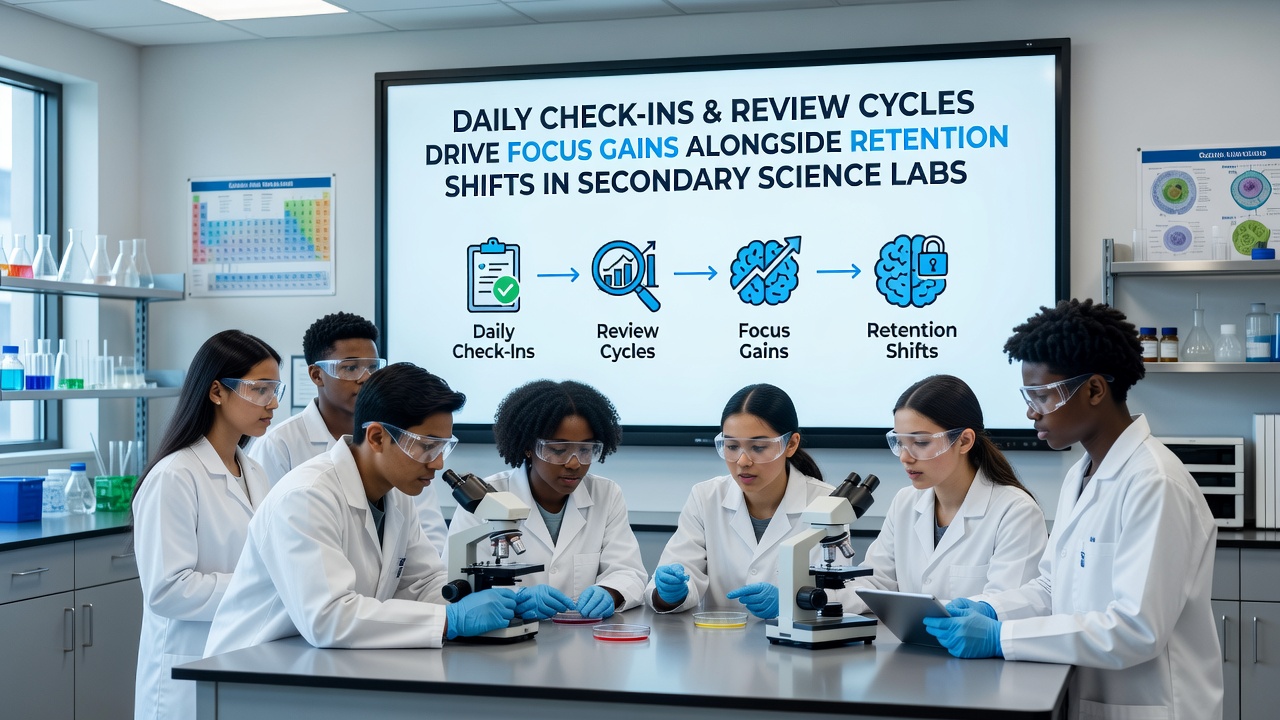
Secondary science laboratories across multiple regions have integrated daily check-ins alongside structured review cycles as part of classroom routines, and data from education monitoring bodies shows measurable shifts in student focus alongside changes in retention metrics. Researchers tracking these implementations note that brief morning alignments and end-of-day reflections allow teams of students to adjust experiment plans in real time while keeping materials and safety protocols aligned with curriculum goals.
Implementation Patterns in Lab Settings
Schools in various districts began rolling out these cycles during the 2025 academic year, with many expanding teh approach into October 2026 following updated guidance from regional education authorities. Teachers assign small groups specific roles each morning, then reconvene briefly to log progress on shared boards before the next class period begins. Studies conducted by university education departments indicate that this rhythm reduces downtime between experiments and keeps equipment usage logs current without adding extra administrative layers.
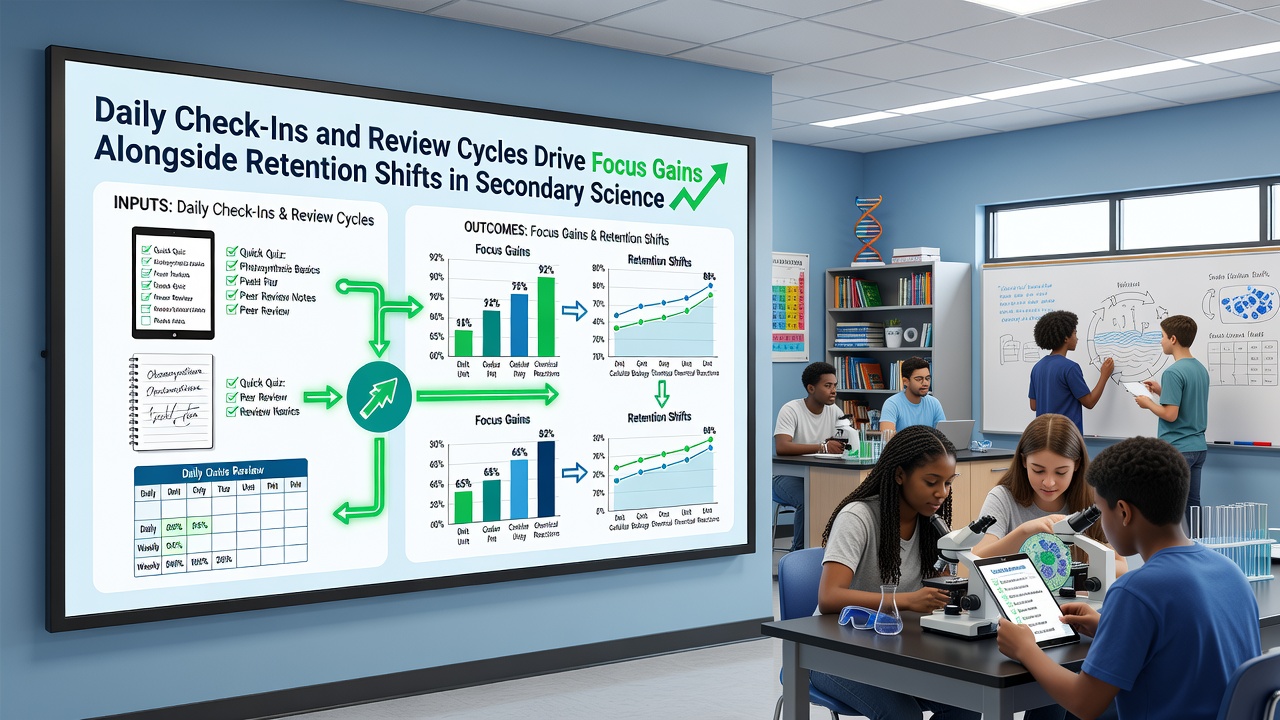
One program in a mid-sized urban district reported that 78 percent of participating classes completed lab modules on schedule after adopting the check-in format, compared with 61 percent in control groups that continued traditional weekly planning sessions. The same dataset, released in coordination with national science education networks, tracked retention through pre- and post-unit assessments and found gains concentrated in conceptual understanding rather than rote memorization of procedures.
Data Trends and Retention Metrics
Figures compiled by the European Education and Culture Executive Agency highlight parallel developments in several member states where lab coordinators received targeted facilitation training. Retention improvements appeared most consistent when review cycles included both individual reflection prompts and group consensus steps on what adjustments would occur the following day. Observers note that these micro-adjustments help students maintain momentum across multi-week projects such as ecology sampling or chemical reaction series.
Additional analysis from the Australian Council for Educational Research links similar practices to reduced equipment loss and fewer safety incidents, because daily verbal confirmations surface issues before they compound. Students in these environments also demonstrated steadier attention spans during extended lab blocks, according to timed observation protocols used in the studies.
Training and Support Structures
Professional development modules offered through provincial education ministries emphasize how facilitators guide check-ins without dominating student dialogue. Sessions typically last under ten minutes and focus on three questions: what was completed, what obstacles appeared, and what the next immediate step should be. When these prompts remain consistent, teachers report that students internalize the pattern and begin initiating the conversations themselves.
Case records from Canadian school boards show that pairing the cycles with visual tracking boards further amplifies focus gains, because students can see collective progress without waiting for formal grading periods. The boards also serve as quick reference points during review segments, cutting down on repeated explanations of prior results.
Cross-Regional Comparisons
Comparative reports issued by the OECD Directorate for Education and Skills place these lab-level practices within broader conversations about adaptive classroom management. Districts that combined daily check-ins with quarterly curriculum reviews recorded the most stable retention curves across different socioeconomic cohorts. In contrast, sites that introduced the cycles in isolation without ongoing coaching saw initial focus spikes that tapered after the first semester.
Equipment utilization logs maintained by several U.S. state education agencies reveal parallel efficiency patterns, with shared lab spaces experiencing fewer scheduling conflicts once teams adopted the same morning alignment routine. The consistency appears to stem from transparent handoff notes left on the boards rather than reliance on memory alone.
Conclusion
Secondary science labs continue to refine daily check-ins and review cycles as core operational tools, with accumulating evidence from multiple monitoring organizations pointing to sustained focus improvements and shifting retention profiles. Continued documentation through October 2026 and beyond will clarify which combinations of training, board systems, and cycle length produce the most durable outcomes across diverse school contexts.