Rafael Walter · 6 September 2026
Government Initiatives Fund Educator Training in Facilitation Techniques for Adaptive Classroom Adjustments
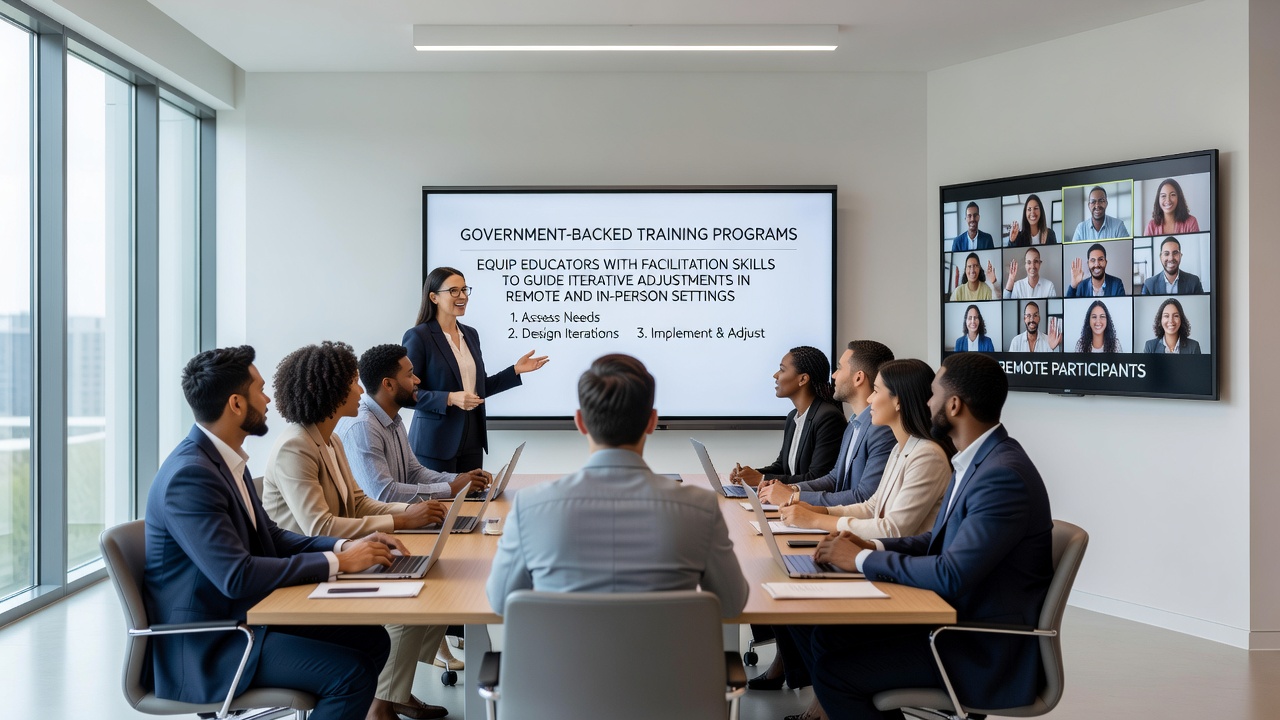
Government agencies across multiple regions have rolled out training initiatives designed to build facilitation expertise among educators, allowing them to guide iterative adjustments whether classes occur remotely or in physical spaces, and these programs draw on structured methodologies that emphasize feedback loops and responsive planning. Data from education departments indicate that such efforts began expanding in 2024 with additional phases scheduled for September 2026 in several jurisdictions, where participants learn to apply facilitation approaches that support ongoing refinements based on learner input and performance metrics.
Officials note that the core curriculum covers techniques for leading group discussions, managing dynamic pacing, and incorporating real-time observations into lesson modifications, while modules address both digital platforms and traditional settings to ensure consistency across formats. Researchers from academic institutions have documented how these skills enable educators to conduct short cycles of planning, execution, review, and revision, resulting in measurable shifts in student engagement levels according to preliminary evaluations.
Core Components of the Training Curriculum
Participants engage with sessions that break down facilitation into observable practices, including active listening protocols, question sequencing that prompts reflection, and methods for synthesizing group consensus without directing outcomes. Training materials highlight the use of visual mapping tools and digital whiteboards during remote sessions alongside physical manipulatives in in-person environments, creating parallel structures that participants practice through simulated scenarios. Evidence from pilot cohorts shows that educators complete between 40 and 60 hours of combined online and onsite modules before certification, with assessments focusing on observed facilitation episodes rather than written tests alone.
Programs often integrate case examples drawn from diverse school districts, where one group of instructors applied iterative adjustments to science units by collecting weekly feedback and revising experiments accordingly, leading to documented increases in completion rates. Another set of participants adapted language arts activities across hybrid formats by using shared digital documents that allowed simultaneous edits and commentary, demonstrating how the same facilitation principles translate regardless of delivery mode.
Implementation Across Remote and In-Person Contexts
Training emphasizes that remote facilitation requires additional attention to screen-sharing logistics and breakout room management, whereas in-person work centers on spatial arrangements and nonverbal cue interpretation, yet the underlying iterative process remains identical. Government reports detail how facilitators learn to run retrospectives at the end of each instructional unit, prompting learners to identify what worked, what required change, and what actions follow in the next cycle. These retrospectives occur through video conferencing polls in remote classes or paper-based surveys during face-to-face meetings, maintaining structural parity.
Statistics released by the U.S. Department of Education reveal that over 12,000 educators had enrolled in comparable programs by mid-2025, with similar figures emerging from Canadian provincial initiatives and Australian state education bodies. Observers note that September 2026 marks the start of expanded cohorts in European Union member states, where funding allocations support cross-border exchanges of training resources and joint evaluation frameworks.
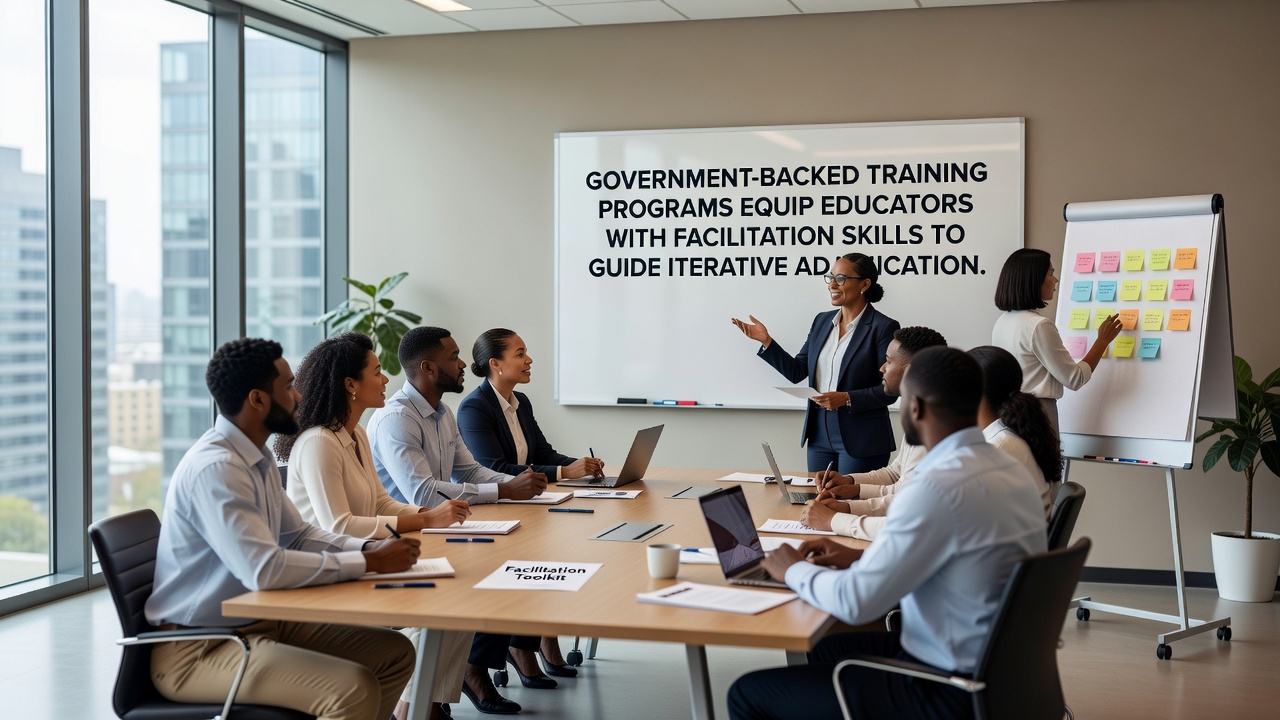
One documented example involves a mid-sized district that shifted its mathematics curriculum after educators completed the training, instituting bi-weekly adjustment meetings that incorporated student performance dashboards and teacher observations to recalibrate pacing guides. Results indicated a 15 percent reduction in the number of students requiring remedial support by the end of the academic year, according to district records. Parallel efforts in another region focused on history courses, where facilitators guided learners through source analysis activities that evolved based on peer feedback collected at regular intervals.
Evaluation Metrics and Reported Outcomes
Assessment protocols track changes in educator confidence through pre- and post-training surveys, alongside longitudinal data on student outcomes collected by independent research teams. Figures compiled by the European Commission education directorate show average gains of 22 percent in self-reported facilitation proficiency among graduates, while follow-up classroom observations confirm increased frequency of adjustment cycles per term. These measurements avoid subjective judgments by relying on countable behaviors such as the number of feedback collection points introduced and the documented revisions made to lesson plans.
Additional partnerships with research institutions provide comparative studies across regions, revealing that programs incorporating both remote and in-person practice opportunities produce stronger transfer of skills than single-mode formats. Participants in combined settings demonstrate greater flexibility when switching between delivery methods mid-year, a capability that proved relevant during periods of fluctuating attendance patterns.
Conclusion
Government-backed training continues to scale as agencies prepare for the September 2026 expansion phases, incorporating updated modules that address emerging technologies while preserving the focus on iterative facilitation. Available evidence indicates sustained interest from school systems seeking structured approaches to responsive teaching, with ongoing data collection supporting refinements to curriculum design and delivery methods in subsequent years.